The Dopamine Crash: Understanding Low Dopamine and Why We Seek Quick Fixes
Dopamine is a brain chemical that fuels motivation, focus, and the sense of reward — it’s what helps you start tasks, stay engaged, and feel like things matter. It’s important because healthy dopamine levels support energy, mood, and follow-through, while dips can make everything feel heavier, harder, or “stuck.”
When dopamine is low, life feels heavier:
It might show up as:
A brief pause where you can’t quite start the next task
A little fogginess or heaviness, like you lost momentum
A quick craving for something fast — a snack, your phone, caffeine, scrolling
A sense of overwhelm that feels louder than the situation
And without even noticing, your brain reaches for the quickest, easiest hit of relief.
It’s simply your nervous system signaling that it’s running low on fuel — and looking for a boost.
But what if the very things we grab for relief are the same things leaving us more depleted?
Why We Go Straight to Quick-Hit Dopamine
When dopamine dips, your brain goes into “reward-seeking mode”:
“I need relief — fast. What’s the easiest way to get it?”
Without even realizing it, we reach for:
Checking notifications
Endless scrolling
Online shopping
Junk food or sugar
Energy drinks
Snacking without hunger
Compulsive productivity (yes, that too)
Seeking drama or emotional intensity
These all deliver a dopamine spike, but:
It’s short
It’s shallow
It crashes quickly
It leaves your baseline even lower
It’s like taking out a payday loan from your nervous system.
You feel better for a moment —
then worse than before.
The Neuroscience of the Crash
Here’s what’s actually happening in the brain:
Quick dopamine spikes overstimulate the reward pathways.
Your brain protects itself by down-regulating dopamine receptors.
Your baseline dopamine drops even lower.
You feel more depleted, overwhelmed, and impulsive.
You chase another spike.
The cycle deepens.
It’s biology.
The Missing Step: Recognizing the Signal Before the Spiral
The true skill is learning to pause long enough to notice:
“Oh — this urge to scroll isn’t boredom.
It’s my brain saying it’s out of fuel.”
Or:
“This craving for sugar isn’t hunger.
It’s a dopamine dip.”
Or:
“This sudden need to reorganize my closet isn’t motivation.
It’s avoidance because I’m overwhelmed.”
This moment of recognition is the hinge point.
Because once you see the pattern, you can interrupt it.
Healthy Dopamine Resets: Fast, Body-Based, and Actually Restorative
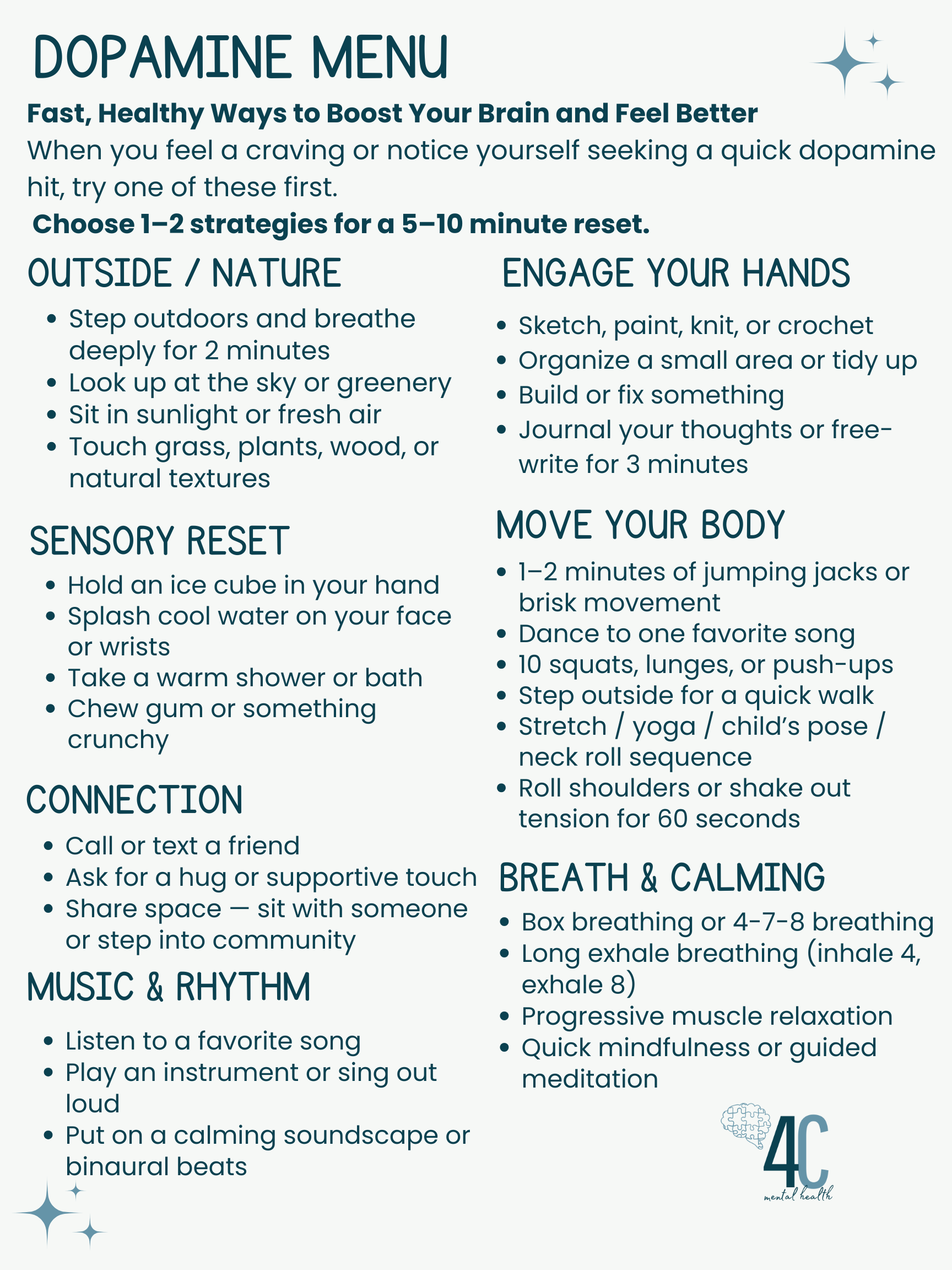
This is where your Dopamine Menu comes in —
small actions that increase dopamine sustainably, without the crash.
Unlike quick hits, these tools:
Quiet the stress response
Activate the prefrontal cortex
Regulate your nervous system
Increase your baseline dopamine
Provide real relief
These are the tools that restore you instead of draining you.
Choose 2–3 healthy dopamine boosts from the below menu that genuinely resonate with you.
Then, set a simple goal for the week: swap just one quick fix per day for one of your healthier options.
If you’re someone who reaches for quick hits 10–20 times a day (like so many of us), swapping just one is not only realistic — it’s powerful. Small shifts compound.
Change takes time, so keep your goals compassionate and doable. Notice how your body responds, how the relief lasts longer, and how even tiny swaps can create a meaningful shift in your mood and energy.