It’s easy to believe: “I’ll do it when I feel more motivated.”
But for most people, that moment doesn’t come.
You wait to feel ready…
and the task stays undone.
Which often leads to:
more stress
more avoidance
and feeling even less motivated
Here’s the shift: Motivation usually comes after you start—not before.
Why This Happens
This idea comes from Behavioral Activation, an evidence-based approach used to treat depression and low motivation.
Research consistently shows:
action can improve mood
avoidance tends to maintain or worsen distress
even small behaviors can create a sense of progress and control
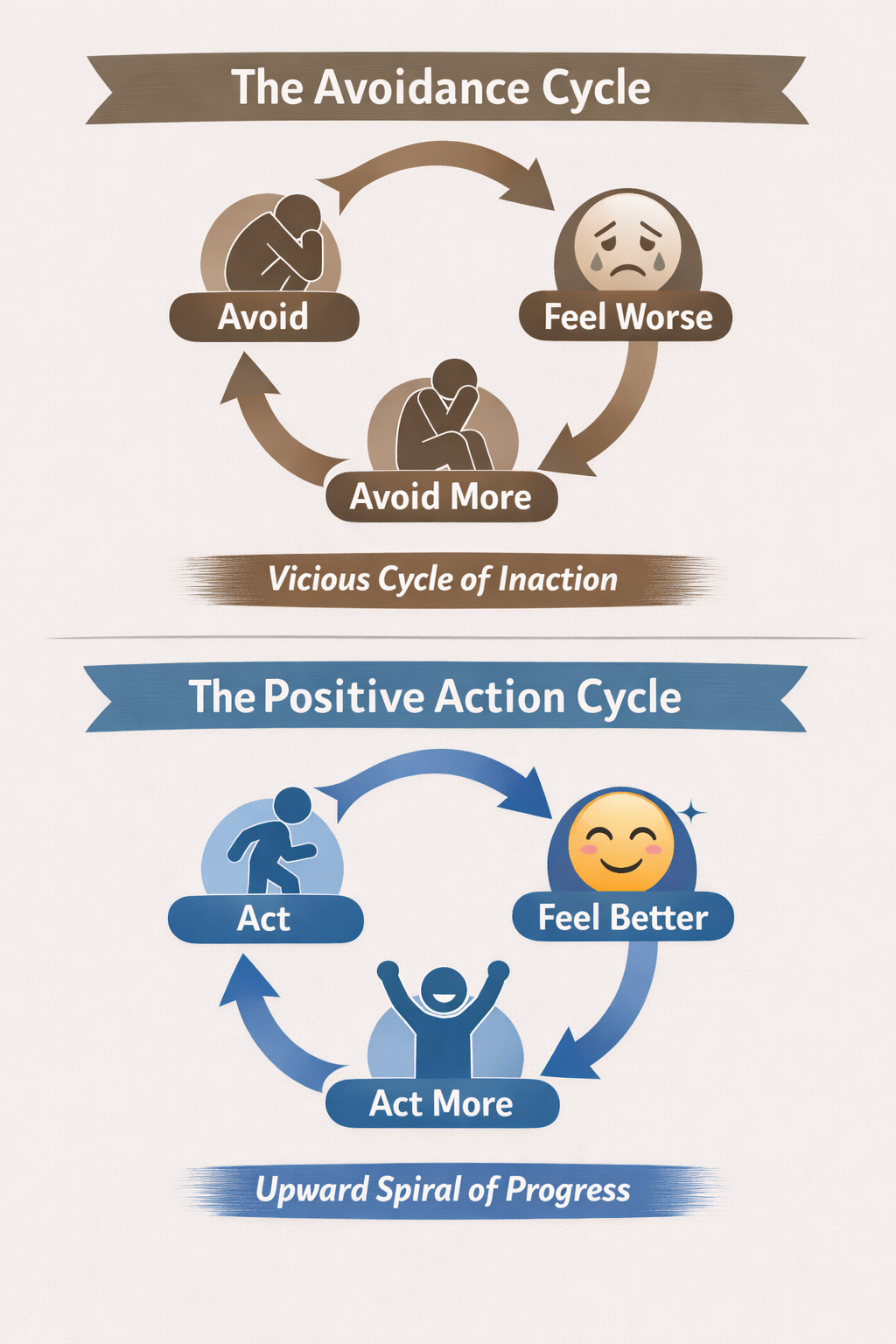
There’s a simple loop happening:
Avoid → feel worse → avoid more vs
Act → feel slightly better → act more
The goal isn’t to do everything.
It’s to interrupt the avoidance cycle—even just a little.
So Keep in Mind
You don’t need to feel motivated to begin.
You just need to start small enough that it feels doable.
Because once you begin:
your brain shifts out of “stuck” mode
momentum starts to build
the task often feels more manageable than expected
The Practice: Start Smaller Than You Think
This takes 1–2 minutes to plan—and just a moment to begin.
Step 1: Name One Thing You’ve Been Avoiding
Choose something that’s been sitting in the background.
Not everything. Just one thing.
Step 2: Ask the Key Question
“What is the smallest possible step I could take?”
Smaller than your brain wants to make it.
Examples:
instead of “work on the project” → open the document
instead of “go for a walk” → step outside
instead of “reach out” → send one message
instead of “clean the house” → clear one surface
The goal is not completion. The goal is starting.
Step 3: Do Just That Step
Give yourself permission to stop after.
Often, you’ll keep going.
But you don’t have to.
What You Might Notice
After taking even a small action, people often feel:
a slight lift in energy
a sense of relief or progress
less resistance than before
Not always dramatic—but noticeable.
That’s momentum beginning.
Why This Works
When you take action:
your brain updates: “I can do this”
you reduce the mental load of avoidance
you create forward movement instead of stuckness
Action changes your emotional state—not the other way around.
Final Thought
You don’t need more motivation to begin.
You need a smaller starting point.
Start small → build momentum → let motivation catch up
That’s how change actually happens.
BONUS: Share here what you are intending to do, so we can hold each other accountable!


