We all experience All-or-Nothing Thinking, or polarized thoughts, from time to time. Thoughts like:
“I’m either doing great or I’m failing.”
“If I’m struggling, that means I’m weak.”
This type of thinking—also called black-and-white thinking—is common, especially in moments of stress. But it can make emotions feel bigger, and choices feel smaller.
The good news? There's a powerful, simple tool that can help shift that mindset: the word AND.
Step-by-Step: How to Use “AND” to Reframe Your Thoughts
Step 1: Notice a polarized thought.
Listen for thoughts that include words like always, never, can’t, should, or either/or.
Example: “I made a mistake, so I’ve failed.”
Step 2: Identify what’s also true.
Ask: “Is there something else I can acknowledge or add that’s also valid?”
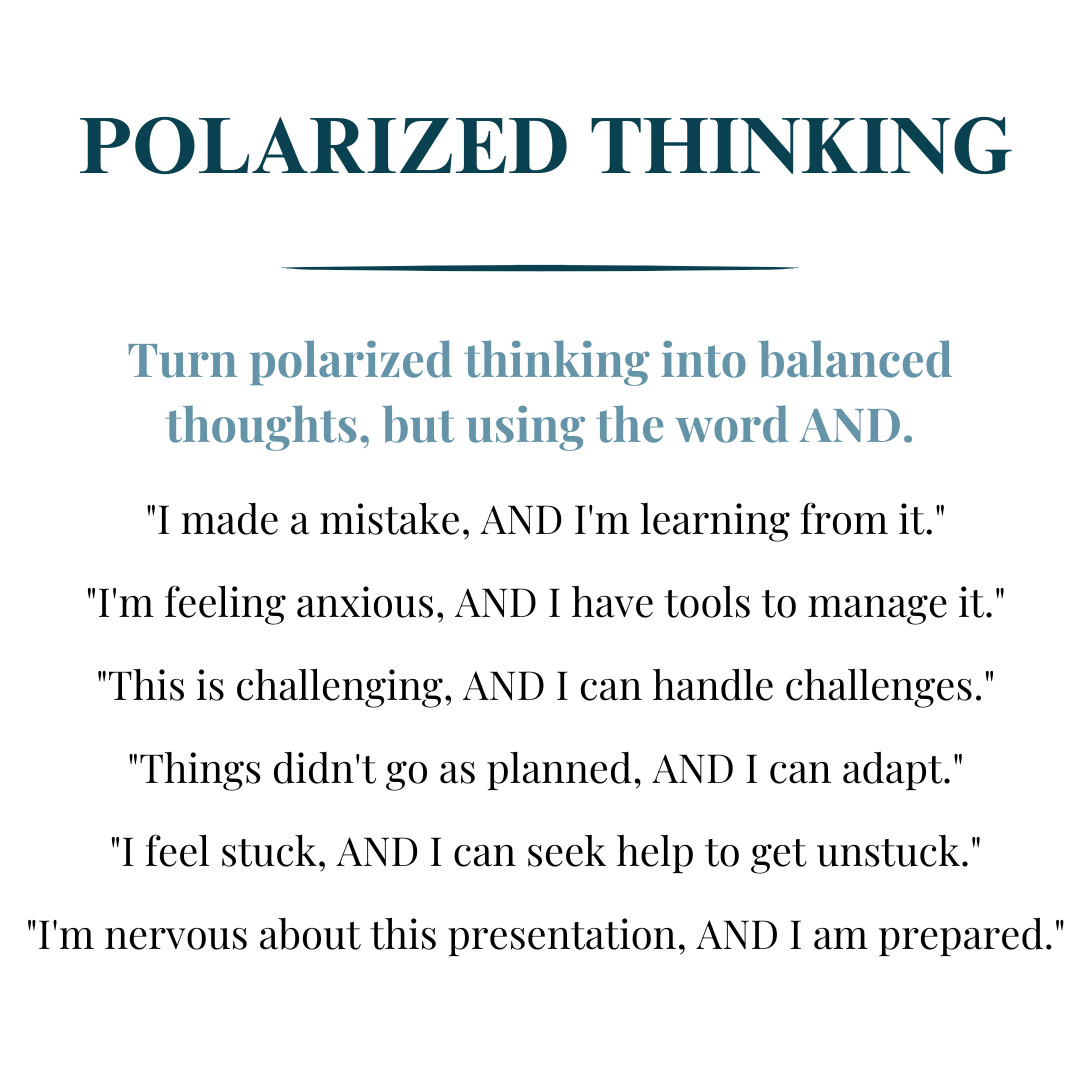
You might realize: “I made a mistake… AND I’m learning from it.”
Step 3: Use the word “AND” to connect both truths.
This small shift creates space for more balanced thinking.
“This is hard, AND I’ve gotten through hard things before.”
“I feel anxious, AND I have tools to manage it.”
Step 4: Say it out loud—or write it down.
This makes the reframe more real. Bonus points if you use it in a conversation or self-talk.
Step 5: Repeat the practice.
The more you catch and reframe polarized thinking, the easier it becomes. Over time, your brain starts to build new thought pathways—ones that are more flexible, grounded, and kind.
🧠 Why It Works
Using “AND” doesn’t deny difficult emotions—it makes room for both discomfort and resilience. That’s called dialectical thinking, and it’s a core skill in DBT (Dialectical Behavior Therapy). It's not about toxic positivity—it's about balanced truth.
💬 Try These Reframes Today:
“I’m nervous about this presentation, AND I’m prepared.”
“Things didn’t go as planned, AND I can adapt.”
“I feel stuck, AND I can seek help to move forward.”
You are not your thoughts.
But you can shape them.
Use “AND” to remind yourself: two things can be true—and you get to choose how you respond.


