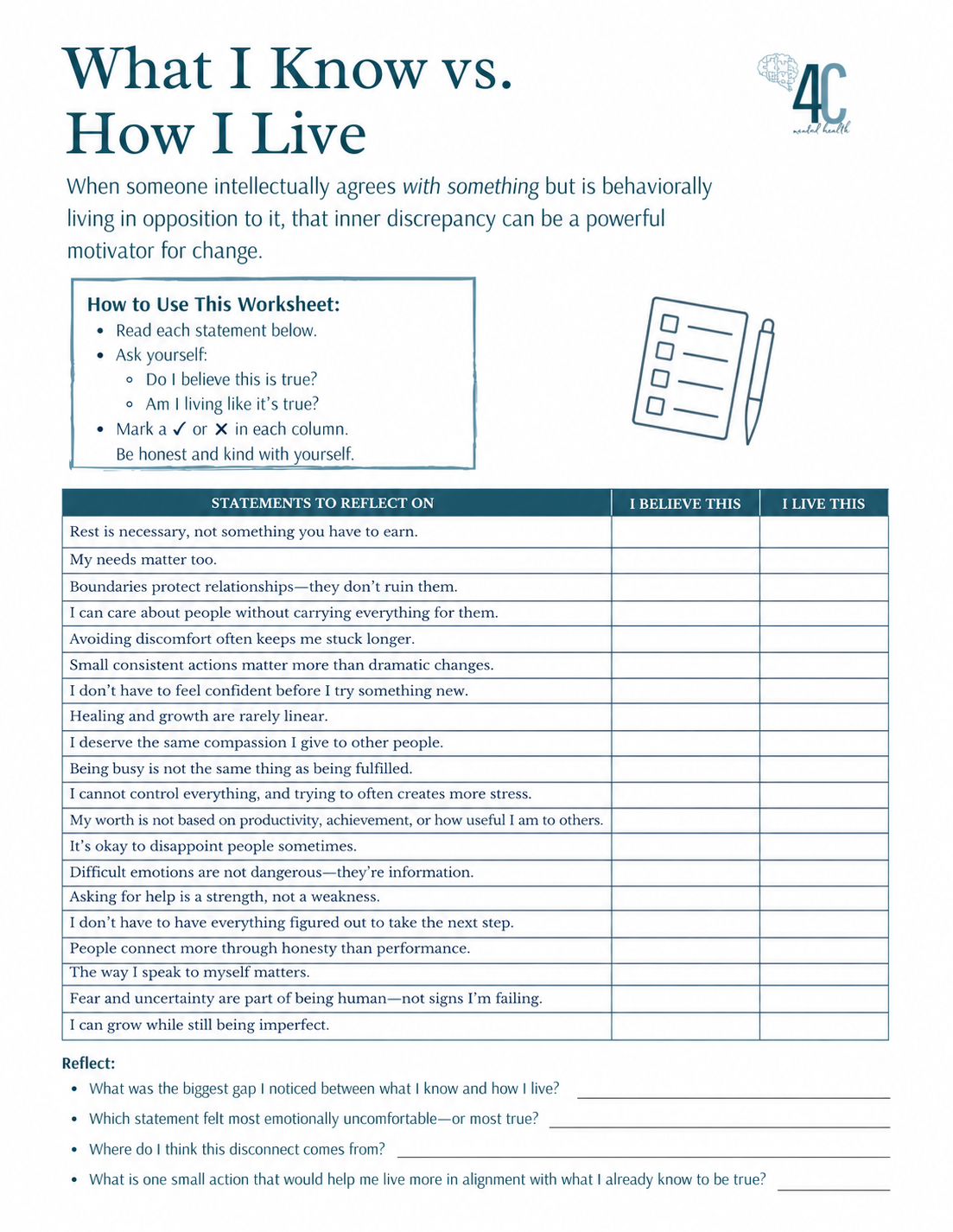
When someone intellectually agrees with something but is behaviorally living in opposition to it, that inner discrepancy can be a powerful motivator for change.
Why This Works
This internal contradiction—between what you know is true and how you live—creates a tension psychologists call cognitive dissonance.
Cognitive dissonance isn’t a flaw. It’s actually a gift.
Because once you notice it, you can use it as fuel for transformation.
“If I believe this, why am I not living like it?”
“What’s getting in the way—and what would it look like to realign?”
This exercise helps you bring that gap into focus—gently, honestly, and without shame—so you can better understand yourself and move toward living in a way that feels more aligned, intentional, and true.
How to Do It
Step 1:
Read each of the statements below—slowly, one at a time.
Step 2:
After each one, reflect on two key questions:
🧠 Do I believe this is true?
🚶♀️Am I living like it’s true?
Step 3:
If your answer is:
“Yes, I believe this—but I’m not really living like it,”
gently explore:
Where the misalignment shows up
What it may be costing you (peace, connection, energy, confidence, time, joy, rest, etc.)
What small shift could help you move toward alignment
Why This Inspires Change
This exercise doesn’t ask you to become a different person.
It asks you to notice where your actions, habits, or patterns may no longer match the wisdom you already carry inside yourself.
That awareness can be uncomfortable—but it can also be incredibly freeing.
Because lasting change often doesn’t begin with learning something brand new.
It begins when we finally start living in alignment with what we already know.
And the more aligned you become, the more grounded, peaceful, and authentic life tends to feel.
Which one are you going to take steps toward practicing this week?


